Learn what you should be looking for in an all-terrain wheelchair
All-Terrain Wheelchairs: What They Are and How They Work
If you’ve ever stopped at the edge of a pavement and wondered whether the park path, gravel track, or grassy field ahead is actually manageable, you’re not alone.
In encouraging people to get outdoors as much as possible, there has been a rise in interest for all-terrain wheelchairs.
This guide explains the main options, what to look out for, and how to decide what might work best for you—so you can go further with less effort and more confidence.
Is there really such a thing as an all-terrain wheelchair?
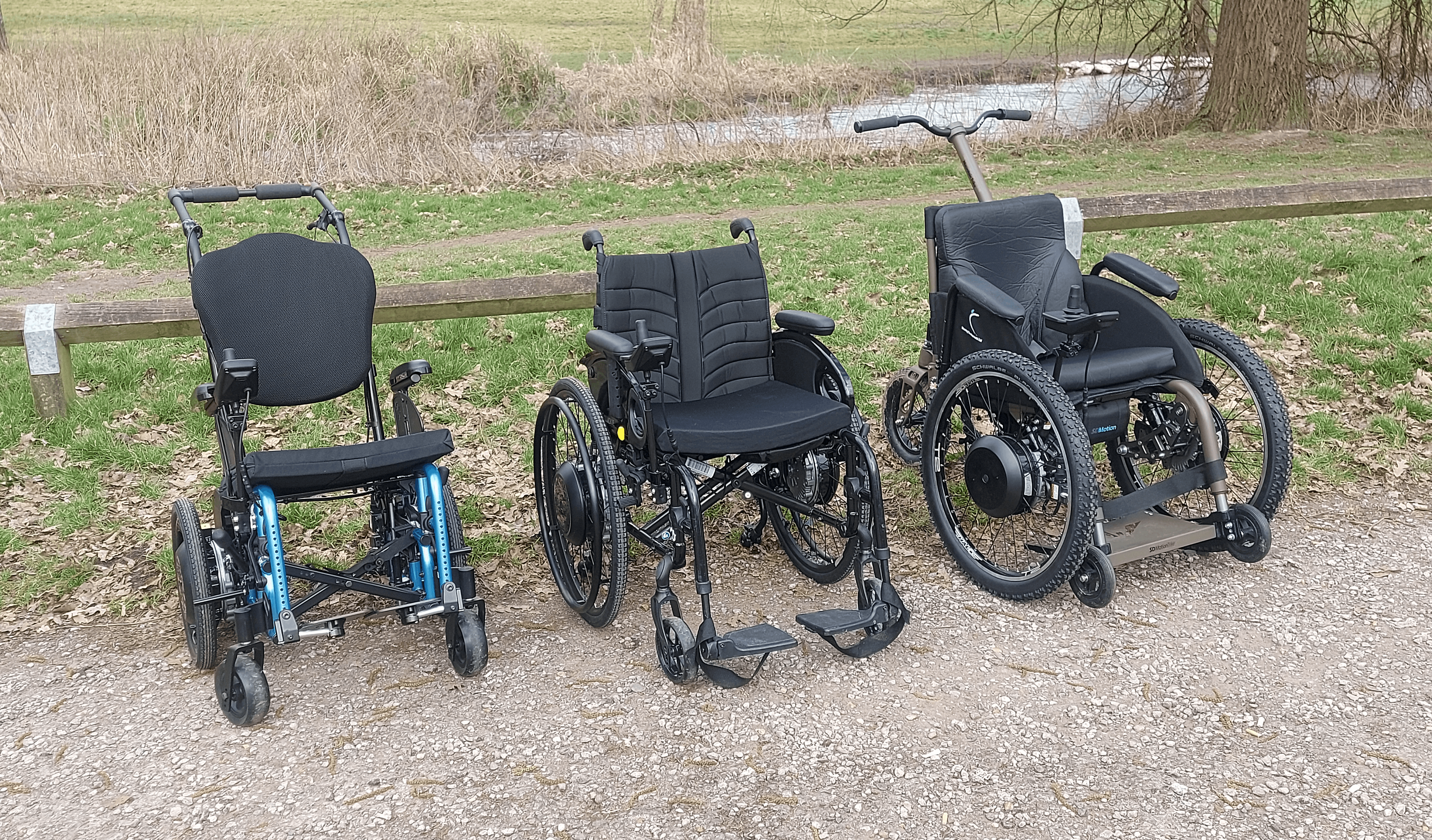
Yes—but it’s more of an umbrella term than a single design. Most all-terrain setups fall into one of three categories:
Off-road manual wheelchairs with wider tyres and tougher front ends
Power add-ons that attach to your everyday manual chair for extra grip and pulling power
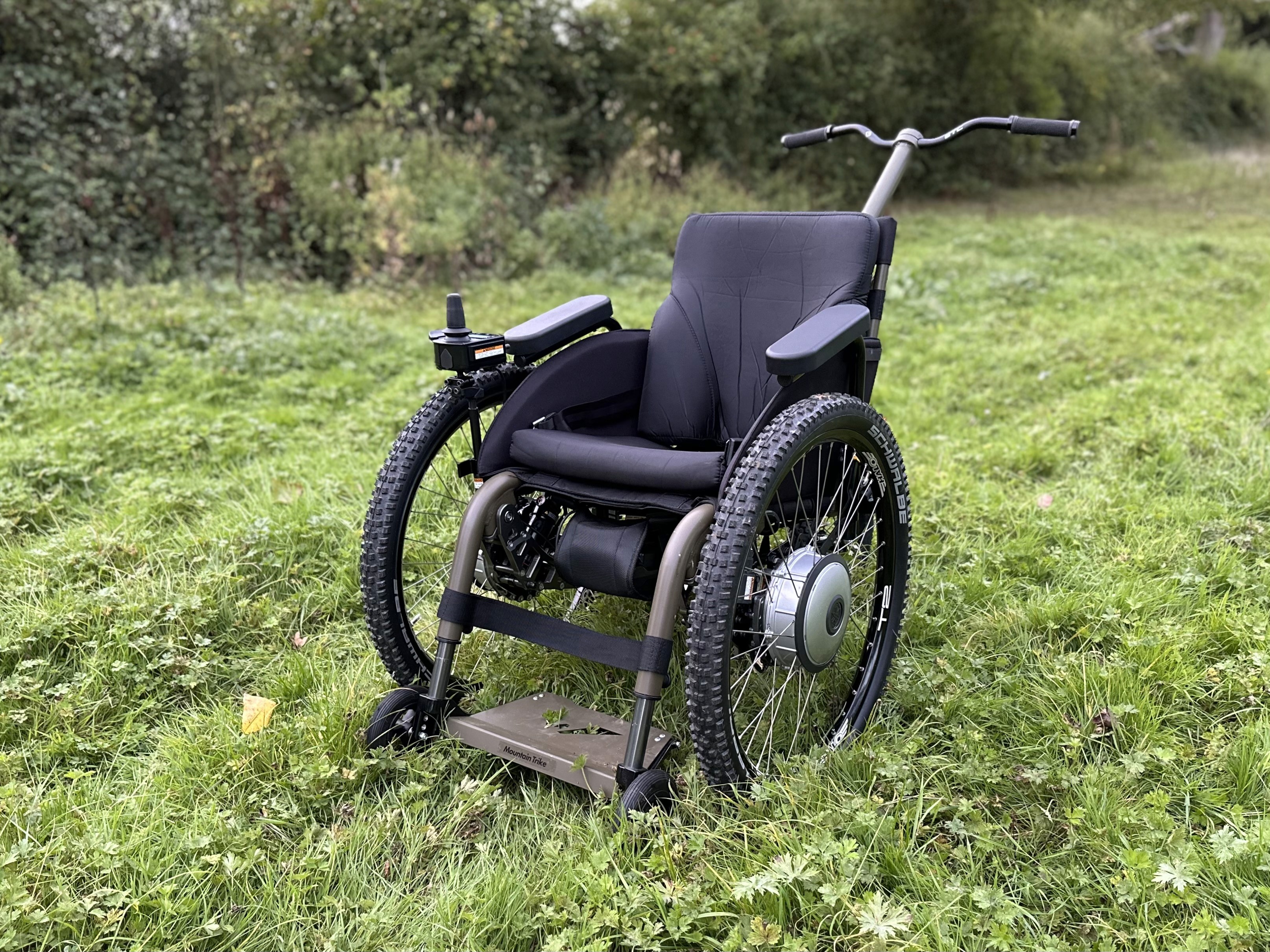
Trike conversions that add a powered front wheel for stability on rough ground
All of them are designed to cope better with surfaces like park paths, towpaths, gravel, grass, and compacted dirt. The right choice depends on how strong you feel pushing, how far you want to go, and how rough your routes really are.
What types of off-road setups are available?
Off-road manual setups
These are usually standard manual chairs with some upgrades, such as wider pneumatic tyres, larger or anti-dig front casters, or a front attachment that lifts the small casters clear of bumps and ruts.
They’re best for confident manual users who want to stay fully self-propelled and only head off pavement for short stretches.
Power add-ons
Power add-ons attach to your existing wheelchair and give you a boost when you need it. You keep your own seating and chair setup, which means it still feels familiar indoors and in tight spaces.
They’re ideal for longer outdoor paths, gentle slopes, and uneven ground, helping you save energy and reduce strain on your shoulders.
Trike conversions
A trike conversion adds a powered third wheel and turns your wheelchair into a longer, more stable setup. The larger front or rear wheel gets you over bumps and loose surfaces with much more control.
This is what many people picture when they think of an all-terrain wheelchair, as it offers strong traction, good ground clearance, and confidence on park and woodland paths.
What should you look for in an all-terrain setup?
Start with the surfaces you actually want to use, then look for features that match them.
Tyres: Wider tyres spread your weight and grip better on grass and gravel. Lower pressure can also improve comfort.
Front-end design: Small casters can dig in. Trike fronts or caster-lifting attachments help you roll over roots and ruts.
Comfort and vibration: A bit of flex or suspension can make longer rides far less tiring.
Torque rather than speed: Outdoor use needs pulling power, especially for starting on slopes or loose ground.
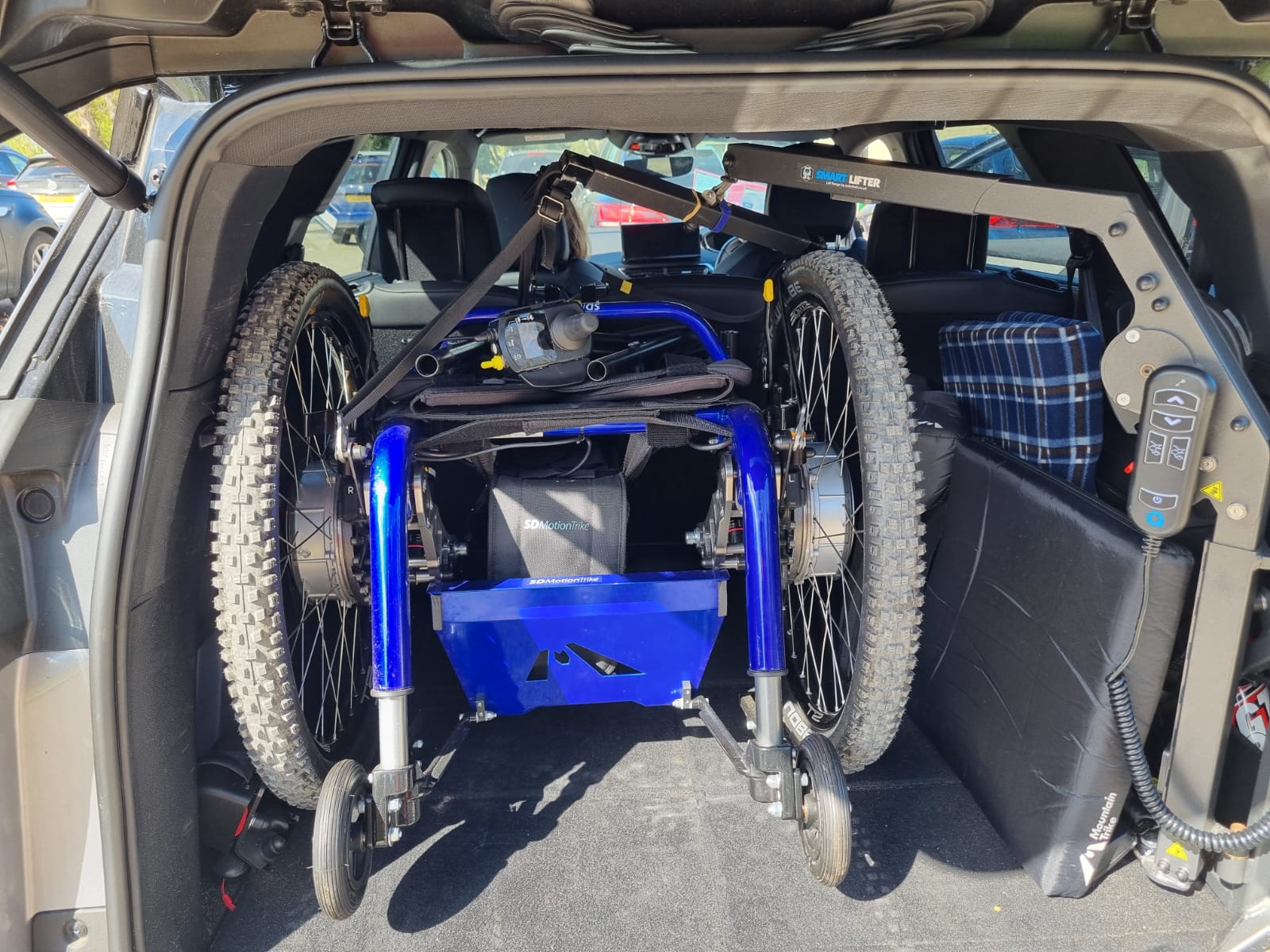
Weight and portability: If you lift your kit into a car or use public transport, quick-release and lighter components matter.
Battery and controls: Multiple assist levels let you save energy on easy sections and add power when needed.
Braking and stability: Reliable brakes and a stable wheelbase are essential on wet grass and downhill paths.
Fit and feel: Keeping your seating position and balance familiar helps with confidence and control.
Can you keep your manual chair and still go off pavement?
Absolutely. That’s exactly what add-on power systems are designed for.
By installing a compact power unit to your own chair, you get extra traction and stability outdoors without having to change the familiarity of your manual chair.
Or with a third wheel attachment you can have more stability over bumpy terrain.
The big advantage is continuity. You keep your transfers, seating, and day-to-day manoeuverability, while gaining the confidence to explore further.
Common options, simply explained
Off-road manual chair
Best for short off-pavement trips and people who enjoy pushing. Lightweight, easy to transport, and simple—but harder work on longer or looser surfaces.
Power assist add-on
Ideal if you want to keep push rims and indoor agility while adding assistance for slopes, ramps, and park paths. Helps manage fatigue and protect your shoulders.
Trike conversion
Great for mixed or rougher routes where stability and traction really matter. The powered third wheel and air shocks smooth out the ride and boosts confidence outdoors.
If you already use a manual chair and want more traction without moving to a full power chair, powered wheels or front-end add-ons can be a good middle ground.
How to assess your local routes
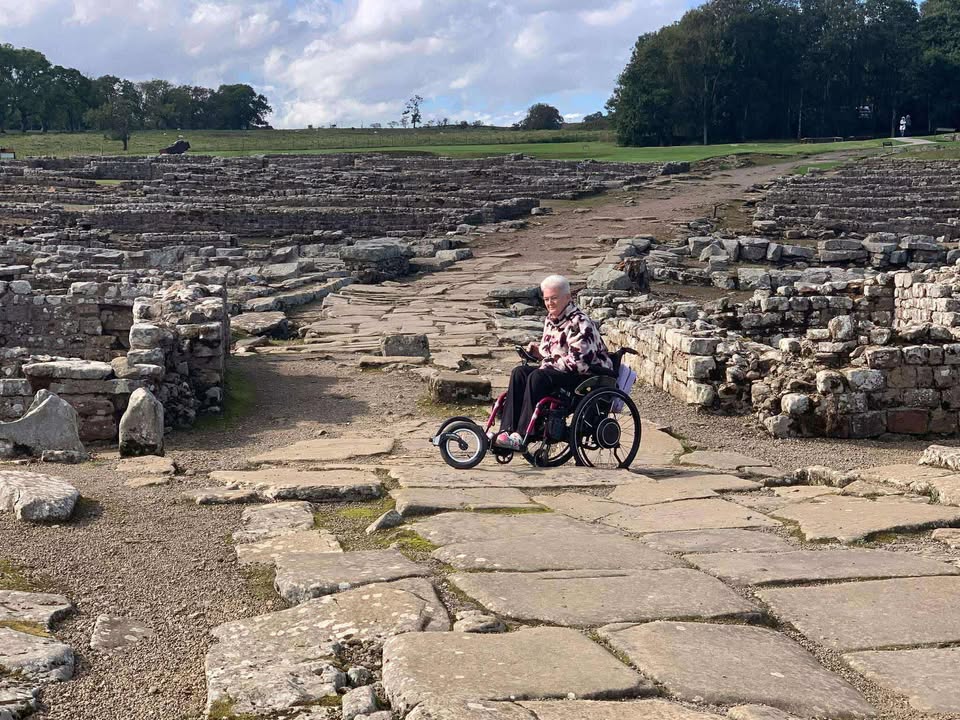
Roll or walk them first and note surface changes, cambers, and pinch points
Pay attention to short, steep slopes
Check how surfaces feel after rain
Think about practical details like lifting weight, storage, and doorway space
What to try during a demo or trial
Starting and stopping on a slope
Slow-speed control around corners
Transitions from tarmac to gravel
Comfort over 20–30 minutes of mixed terrain
Switching between assist levels
Attaching and removing the unit
Lifting or transporting it as you would day-to-day
Which setup suits which user?
You like pushing and want minimal equipment: Off-road manual tweaks
You want to protect your shoulders and keep your chair’s feel: Power add-on assist
You want maximum confidence outdoors: Trike conversion with strong front-wheel drive
In summary
There isn’t one all-terrain wheelchair that suits everyone—but there is almost always a setup that suits you.
Manual off-road tweaks keep things light for short adventures. Power add-ons extend your range while keeping your chair familiar. Trike conversions deliver stability and pulling power for more challenging routes.
Start with the surfaces you want to tackle, then focus on torque, control, comfort, and practicality. With the right match, you’ll go further, use less energy, and enjoy the outdoors with confidence.