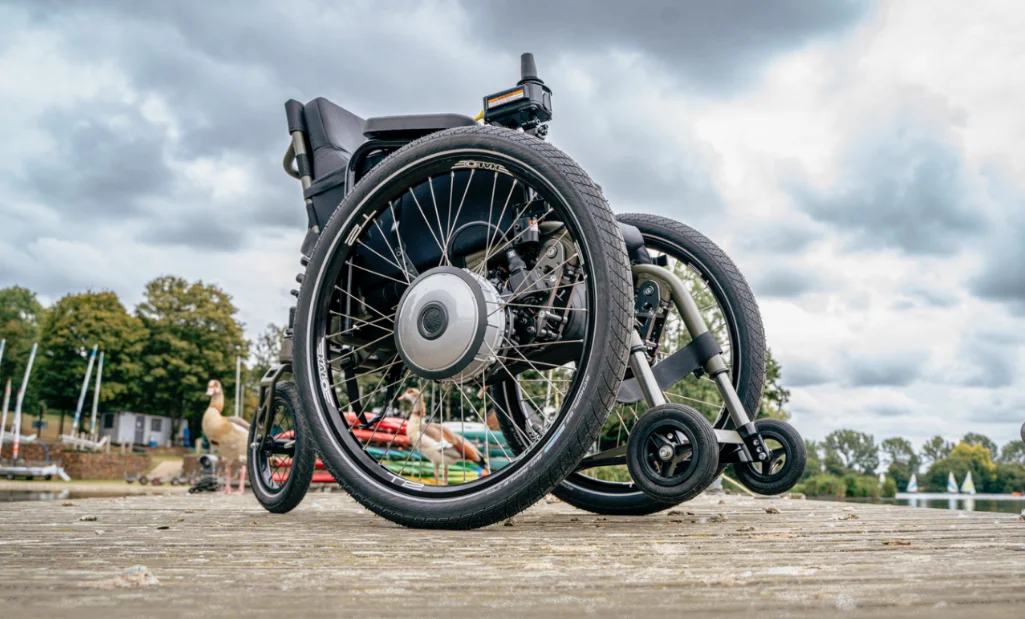
Long weekends and early summer trips should feel light, spontaneous and within reach. If you use a manual wheelchair and have been eyeing seaside promenades, campsite tracks or festival fields, a compact power add-on can turn a maybe into a confident yes.
This guide focuses on what matters when you are packing small and moving often. We will cover flying and rail rules for batteries, boot-friendly packing tips, on-the-go charging, and how to choose between a power-assist kit, a joystick conversion and a trike for mixed terrain. You will also find a short pre-trip checklist and advice on renting or trialling before you book.
The aim is simple: fewer hurdles, more holiday.
Travel light: choosing the right add-on for the trip
When space is tight and days vary between pavements and paths, pick the lightest setup that still covers your ground.
- Power-assist modules, such as SD Motion Assist, reduce the push effort while keeping your manual technique. They are typically the lightest choice and fold with your chair. Ideal when you want help on hills and longer days without changing how you steer.
- Joystick conversions, such as SD Motion Drive, turn your manual wheelchair into a powered chair with multiple speed levels and smooth control. They suit promenade cruising, town exploring and moderate paths, and they can be paired with front-wheel options to lift tiny casters clear of ruts.
- All-terrain trikes, such as SD Motion Trike, are purpose-built for rough ground. With large mountain bike tyres, suspension and joystick control, they thrive on sand, grass and woodland paths. Many models fold, use quick-release wheels and fit in a typical car boot.
If your holiday is mostly paved with the odd gravel car park, a power-assist or joystick conversion keeps packing simple. If you plan to roam beach paths, campsite fields or festival grounds, a trike gives you range and comfort across the whole site.
Packing for boot, coach and hold space
A few small choices make loading and changes of transport easier.
- Use quick-release wheels where possible. Removing large rear or trike wheels creates a flatter profile that slides into a car boot alongside your manual chair.
- Keep the battery accessible. Removable Li-ion batteries are lighter to carry in a shoulder bag and often must be detached for air travel anyway.
- Protect the joystick. If your setup includes a joystick, fold or retract it for loading. A simple soft cover prevents knocks.
- Label chargers and cables. Many campsite and festival sockets get shared. Add your name and number on a tag.
Flying with batteries: what to know, who to tell
Airline rules are manageable if you plan ahead. As a rule of thumb:
- Tell your airline early. Notify them that you are travelling with a powered add-on and a removable battery. Ask what documents they require.
- Get the paperwork. SD Motion supplies battery safety data sheets and certification for NiMH and Li-ion packs. Keep digital and printed copies with your booking details.
- Follow capacity and packing rules. Most airlines require lithium batteries to be carried in the cabin with terminals protected. Tape over exposed contacts or use the supplied caps, and pack each battery in its own protective bag.
- Remove your battery at the gate. Keep it with you for boarding to avoid delays if the chair is gate-checked.
Policies vary by carrier and battery capacity, so confirm specifics with your airline before you travel. If anything is unclear, contact the mobility assistance desk for your route.
Rail travel: batteries, ramps and charging
UK rail is generally simpler for batteries than air. Still, it helps to plan:
- Book Passenger Assist. Reserve boarding ramps and a wheelchair space. Mention any detachable components to speed up boarding.
- Carry your battery info. Conductors rarely ask, but having the safety sheet avoids confusion.
- Charge smart. Some long-distance trains have accessible sockets. Bring a short extension lead rated for your charger and ask staff where power is available. Never block aisles while charging.
Charging on the go without fuss
- Top up little and often. Lithium batteries prefer regular top-ups. If your day includes a cafe stop or a lunch break, plug in then.
- Mind the weather. After cold use, let the battery warm to room temperature before charging. Keep it dry, shaded and away from direct heat.
- Travel with the right charger. Dual chargers can reduce turnaround times, but always use a charger approved for your battery chemistry.
Terrain match: seaside, campsites and festivals
Each setting rewards a slightly different setup.
- Seaside promenades and piers: SD Motion Assist keeps things light and nimble. For headwinds, cambers and longer distances, SD Motion Drive adds steady pacing with selectable speed levels.
- Beach access paths and dunes: SD Motion Trike, with wide tyres and suspension, delivers traction and comfort. If you stay with your manual chair, consider a FreeWheel or TrackWheel to lift front casters over ruts and sand.
- Campsites and woodland tracks: Morning dew, grass and shallow ruts call for either a trike or a Drive with off-road tyres and a front-wheel add-on. An attendant controller can help in tight or sloped sections.
- Festival grounds: Mixed surfaces and crowds suit joystick control for fine manoeuvres at walking speed. The Trike handles churned fields; a Drive conversion with front-wheel can work if you stick to main tracks.
Pre-trip checklist
- Confirm transport
- Notify your airline or rail provider about your equipment and batteries.
- Download or print battery safety data sheets and approvals.
- Prepare your kit
- Test battery health and range on a long local outing.
- Pack the approved charger, spare fuses if used, and a short extension lead.
- Add a puncture repair kit or use puncture-resistant tyres if your route includes rough paths.
- Plan power and terrain
- Identify charging stops at your hotel, campsite or festival.
- Check maps for boardwalks, step-free routes and gradient.
- Protect and label
- Pad or cover your joystick and label detachable parts and cables.
- Use a small dry bag for batteries when off the chair.
Try before you fly: rentals and short trials
If you are not sure which configuration suits your holiday, try it first. SD Motion offers demonstrations and works with dealers across the UK for trials and short-term rentals where available. A half day on local paths or a weekend loan can reveal whether a light assist is enough or whether you would benefit from joystick control or a trike for your chosen terrain. Availability and terms vary, so contact the team or your nearest dealer early in your planning.
Quick FAQ
- How do I travel with a power-assist or conversion kit? Detach the battery, protect the joystick, and pack wheels using quick-release hubs. Carry battery documents and notify your airline or book Passenger Assist for rail.
- Are airline and rail rules tricky for batteries? They can be detailed, but they are manageable. Airlines usually require lithium batteries in the cabin with protected terminals. Rail is typically simpler. Always confirm with your carrier.
- Which setup suits beaches, campsites and festivals? Beaches and churned fields favour the SD Motion Trike. Campsites and mixed tracks work well with a Trike or an SD Motion Drive plus a front-wheel. Promenades and towns are ideal for SD Motion Assist or Drive.
- Can I rent or trial before a holiday? Yes. SD Motion and its dealer partners provide demos and, in some areas, short-term rentals. Arrange a trial to confirm comfort, transport fit and range.
Gentle next steps
Bank holidays come around fast. If you want a light boost for pavements, explore power-assist and conversion options on the SD Motion site. If your plan includes sand, grass and woodland, learn how the SD Motion Trike opens up all-terrain travel with folding, quick-release parts and joystick control.
For personalised guidance, documents for travel and to arrange a demo or short trial, contact SD Motion. A brief chat can match your route, your chair and your packing space to the right setup so you can look forward to a smoother getaway.